Where great ideas get their start
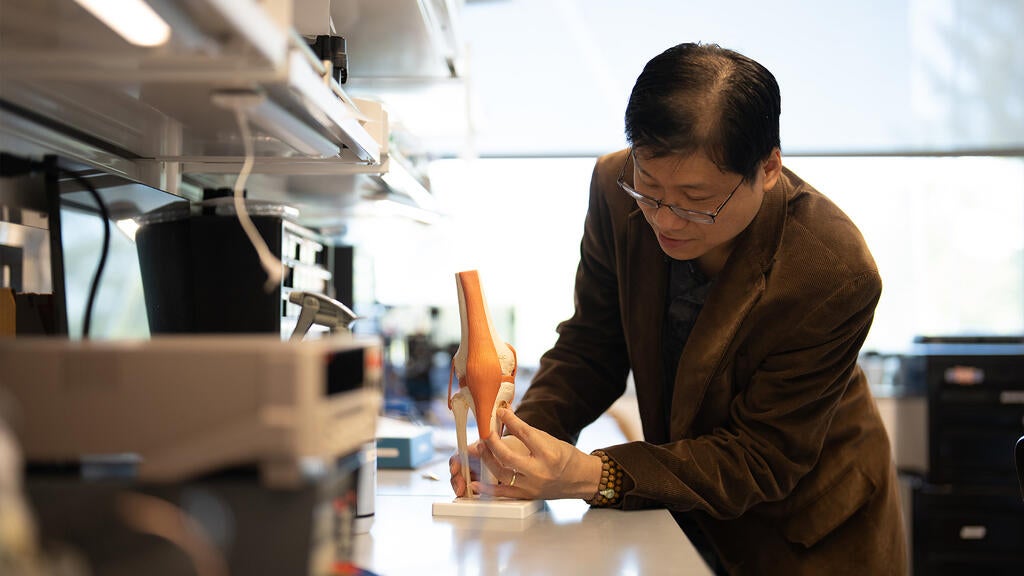
Knee surgery—especially when it’s a complex reconstruction—comes with a long, hard road to recovery. UO bioengineering professor Keat Ghee Ong was determined to help orthopedic patients recover faster. His vision: an implantable sensor that could support the repair and healing process.
Shortly after arriving at UO in 2019, he co-founded Penderia Technologies and set out to turn his vision into reality. The following year, Ong and Penderia won a crucial award—supported in part by UO donors—to propel its research.
In his lab on the Phil and Penny Knight Campus for Accelerating Scientific Impact, Ong soon succeeded where so many others had stumbled. He created a promising prototype that was battery-free and compatible with existing surgical techniques.
Knee reconstructions carry a high rate of graft failure. Ong’s implantable sensor gives surgeons and physical therapists real-time, quantitative data on how the joint is healing. This data helps clinicians fine-tune each patient's rehabilitation plan, potentially reducing setbacks and improving the odds of a successful long-term recovery.
Paired with a lightweight, wireless receiver worn in a brace, the sensor lets patients move freely through therapy while their progress is tracked outside the clinic.
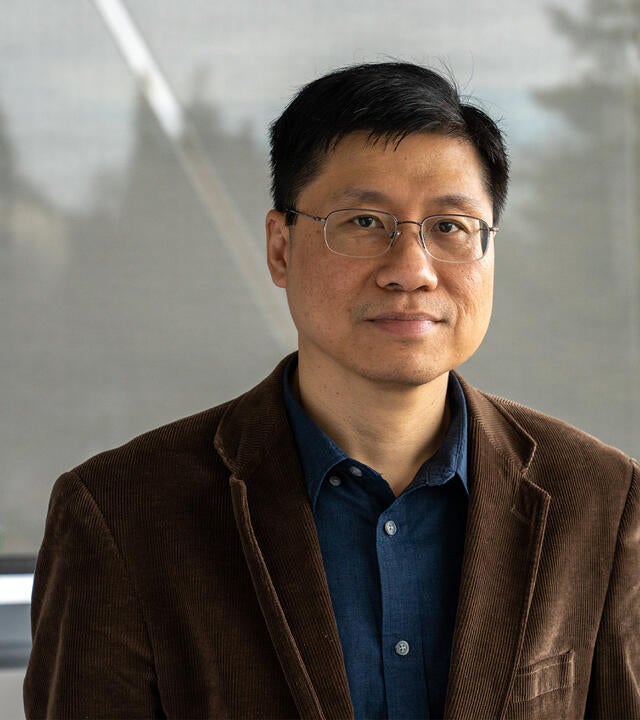
The key is the eagerness and the readiness, which makes the UO quite unique compared to other institutions. When I joined the UO, I got a feeling that they are not just talking the talk. They are actually doing the work as well. All the support they say they provide, they actually provide.”
Keat Ghee Ong
Bioengineering professor and co-founder, Penderia Technologies
Donor-powered momentum
Ong needed to assess the device’s commercial potential, so he got in touch with the UO’s Industry, Innovation, and Translation team.
“At many institutions, if a researcher goes to them with an idea, the first thing they say is, ‘Come back when the idea is more developed,’” Ong remarked in an interview with OregonNews.
Oregon takes the opposite approach.
“We want to start having the conversation early,” UO associate vice president for industry, innovation, and translation Christine Dixon Thiesing told OregonNews. “Researchers should think of our office as their first stop when their research has generated results that could have commercial potential.”
Since 2020, Penderia has received three Translational Opportunity Program (TOP) awards totaling $176,000. This program, funded in part by donor gifts, covers gaps in funding before products are ready for commercial release.
TOP and other donor-supported programs at the UO provide the lifeblood for early-stage innovations like Ong’s. They carry promising ideas past the early stages, when a bank or other investors aren’t ready to offer backing. For Penderia, that support turned a lab prototype into a company, one step closer to the doctors and patients it's designed to help.
Oregon’s venture fund fuels growth
Penderia also landed the first on-campus investment from Launch Oregon, the UO Foundation's homegrown venture fund—supported in part by donations from alumni and individual and institutional investors. In turn, those Launch Oregon dollars spurred further contributions from angel investors.
This fund offers support that goes beyond finances.
“We actually work alongside the founders and help them every step along the way, from company formation to helping startups build out their executive teams,” Launch Oregon director Nate Costa told OregonNews. “It saves founders time, and it also saves them money, so they can put that time and money back into the business.”
Made possible with donor support
Penderia's story is still being written. Last year, the U.S. Food and Drug Administration granted its implantable sensor Breakthrough designation, a status reserved for technologies with potential to improve care for serious conditions.
The company now employs nine people. Together, they’re working toward a day when knee surgery patients recover with more confidence and fewer setbacks.
The Penderia team is on that path because UO donors backed an idea before anyone else would. Penderia is one of more than a dozen student- and faculty-led startups supported by the university’s innovation ecosystem.
And there are more researchers like Ong who have ideas waiting for someone to say “yes.” Imagine what your support could help make possible next.