An Oregon-built model goes national
Too many children and teens face long waits for behavioral health support, with families struggling to find the help they need. A first-of-its-kind program at the University of Oregon is working to change that.
The Ballmer Institute for Children’s Behavioral Health has spurred a groundbreaking 2026 law that creates a new class of behavioral health and wellness practitioners for Oregon. Now, bachelor’s degree-level providers will be licensed to provide much-needed behavioral health interventions for children and teens. They’ll fill a critical gap in the state’s behavioral health workforce.
Philanthropy helped turn an ambitious idea into a new approach to support youth behavioral health. Continued donor support can help extend that impact—preparing more providers, reaching more young people, and creating a model that can grow far beyond Oregon.
“The needs of young people are rising faster than our current workforce can support, and too many families are left waiting for help,” Ballmer Institute executive director Katie McLaughlin said. “At the Ballmer Institute, we are working to change that by training future providers to deliver critically needed services in early identification of behavioral health challenges and brief interventions to prevent concerns from escalating into a crisis.”
A personal connection
Founded in 2022, the institute was launched with a transformational lead gift from Connie and Steve Ballmer, co-founders of Ballmer Group Philanthropy. Donors of all levels have since stepped up to support the institute’s growth, some motivated by deep personal concerns for their own children’s mental wellness.
That was the case for Lisa Redekop and Les Koski, whose teenage daughter Ashley received a late diagnosis of ADHD. Only after Ashley graduated high school did they realize that her Portland alma mater lacked the resources to fully support neurodiverse students.
As Koski explained, the school staff could help with certain tasks but had limited capacity to explore the underlying reasons for the challenges Ashley faced.
“That’s why we started getting educated about the Ballmer Institute,” Redekop said. “It felt really personal and deeply meaningful to us because I can’t even imagine how our lives would be different if Ashley had a whole lot more help earlier on.”
The couple went on to pledge $100,000 to support annual summer internships for Ballmer Bound UO students.
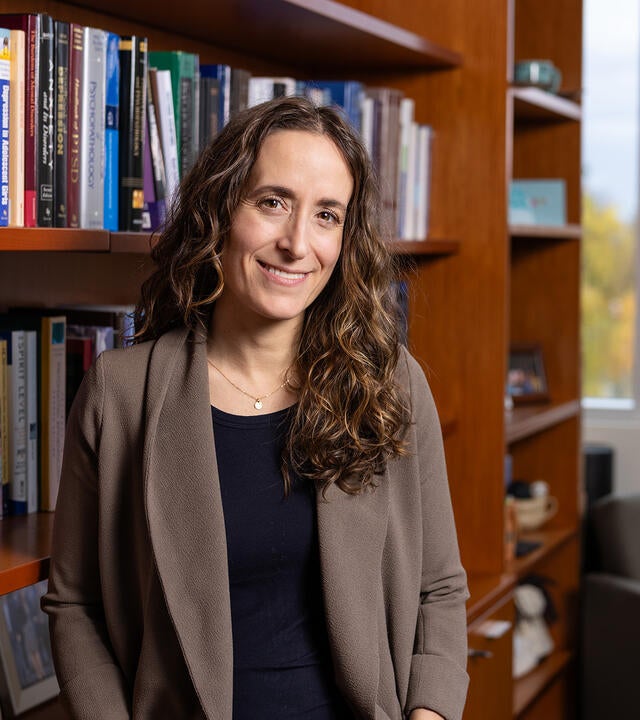
The needs of young people are rising faster than our current workforce can support, and too many families are left waiting for help. At the Ballmer Institute, we are working to change that by training future providers to deliver critically needed services in early identification of behavioral health challenges and brief interventions to prevent concerns from escalating into a crisis.”
Katie McLaughlin
Executive director, Ballmer Institute for Children’s Behavioral Health
Opening new doors
The Ballmer Institute graduated its first class in June 2026.
“I feel like I have this whole new door opening for me, and I’m excited because I know there’s so much to do behind that door,” Stacee Wion, BA ’26, said.
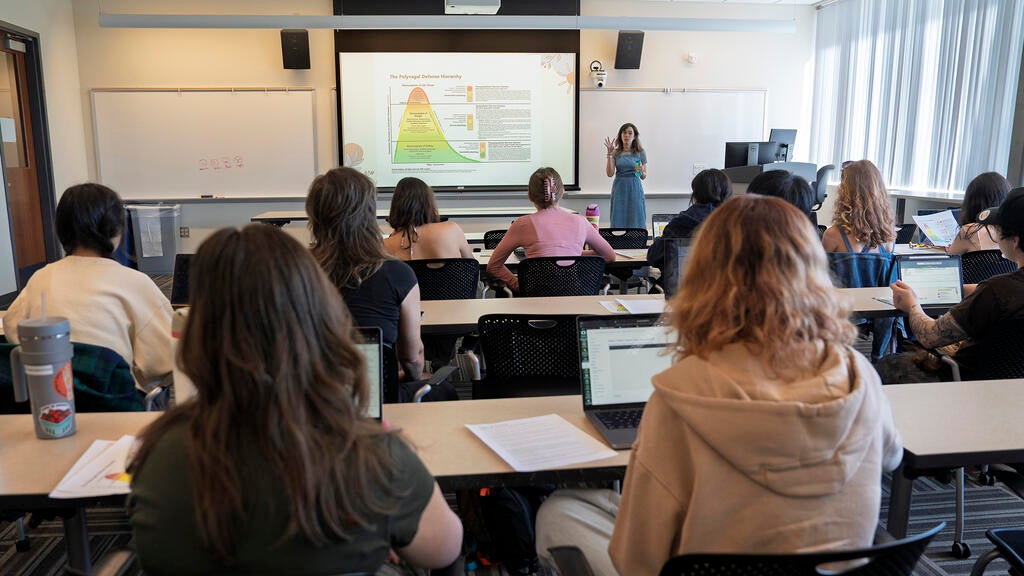
With 700 hours of on-site training under their belts, these Ducks are now entering the workforce, forming the front line of support for youth. Their paths may ultimately support schools, pediatric primary care clinics, community-based organizations, and mental health agencies.
And this movement is expanding beyond Oregon. Influenced by work underway at the UO, Nevada enacted legislation in 2025 to create a behavioral health and wellness practitioner license built on the Ballmer Institute’s training model.
Shaping what comes next
In August, Ballmer Group committed $125 million to launch the institute's new Catalyst Center for Youth Behavioral Health—an innovation hub to expand its mental health training program across the country. The expansion will begin with three universities. Each will receive $30 million in seed funding to launch a bachelor’s-level training program aligned with the Ballmer Institute model.
The Catalyst Center plans to partner with up to 18 universities nationwide over the next decade. These programs have the capacity to train tens of thousands of new providers and serve millions of children.
“We are experiencing a crisis in youth mental health, driven in part by a shortage of trained professionals,” UO President Karl Scholz told OregonNews. “One university or one state acting alone will not solve the crisis... With this grant, the Ballmer Institute can now expand this innovative approach to other universities, helping to build the scale of response required to meet the needs of children across the country.”
From helping students gain hands-on experience to expanding an Oregon-born model across the country, philanthropy has fueled the Ballmer Institute’s work from the beginning. And its next chapter offers donors an opportunity to be part of what comes next: preparing more providers, bringing support to more young people and families, and helping transform how communities respond to youth behavioral health needs.

I feel like I have this whole new door opening for me, and I’m excited because I know there’s so much to do behind that door.”
Stacee Wion
BA ’26, Ballmer Institute for Children’s Behavioral Health